
Home / Services / Garbage Disposal Repair
GARBAGE DISPOSAL REPAIR AND INSTALLATION
Garbage Disposal Repair in Sarasota, FL: Humming, Jammed or Leaking Under the Sink
A disposal that hums and will not spin, one that leaks into the cabinet, or one that has simply stopped. Each has a different cause, and each tells you whether to fix or replace.
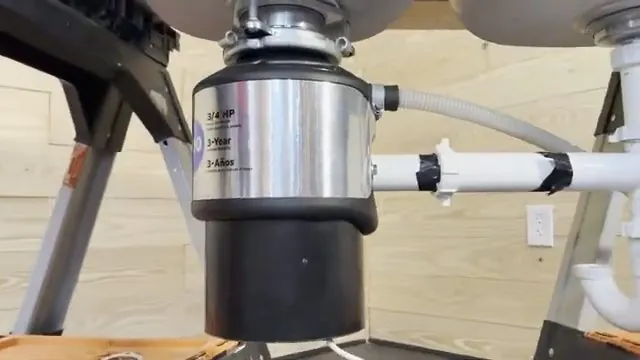
A garbage disposal is out of sight, so people forget it until it fails. It usually fails one of three ways: it hums and will not turn, it leaks, or nothing happens at all. The sound or the puddle tells you most of what you need to know.
Disposal hums but will not spin: clearing the jam safely
A hum with no rotation means the grinding plate is jammed, usually by a hard object or a clump of food. The motor is trying to turn and cannot.
- Turn the wall switch off, and unplug the unit under the sink or switch off its breaker. Never put your hand in the opening.
- Look down the drain with a flashlight. Remove any visible object with tongs or pliers, not fingers.
- Find the hex socket in the center of the underside of the unit. A hex wrench turned back and forth clears most jams.
- Press the red reset button on the underside, restore power and try the switch.
If it hums again right away, stop. A motor that keeps jamming or a unit that keeps tripping its reset is telling you something.
Where is it leaking?
| Where the water appears | Usually | Fixable? |
|---|---|---|
| From the sink flange at the top | A failed seal or gasket | Usually, with a reseal |
| From the dishwasher hose connection | A loose or cracked hose | Yes |
| From the drain pipe at the side | A loose fitting or gasket | Yes |
| From the bottom or the body of the unit | The housing has failed | No. Replace the unit |
Water from the bottom of the body is the clear signal to replace. A repair on a housing that leaks is a repair on a unit near the end of its life.
Water under the sink? Turn off the unit and call.
CALL A PLUMBER NOW(727) 766-0323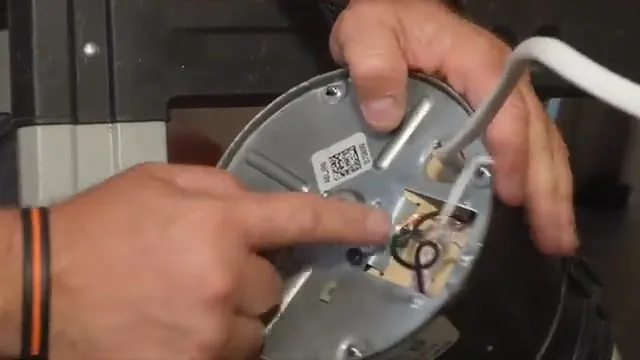
Disposal sounds matched to jams, worn shredders and tripped resets
| Sound | Usually | Next step |
|---|---|---|
| Humming, no spin | A jam | Hex wrench and reset, as above |
| Grinding or rattling | A hard item in the chamber | Switch off and remove it with tongs |
| Loud, metallic noise | A worn or damaged shredder | Replacement may be next |
| Silence, even with the wall switch on | Tripped reset, breaker or a burnt motor | Reset, then call if nothing changes |
Is it the disposal or the drain?
If the sink backs up and the disposal runs normally, the clog is further down. If water rises into the disposal chamber and does not drain, the drain line is blocked. See clearing a clogged kitchen drain for that case. A disposal that runs while water sits in the sink is also usually a drain issue.
Repair the disposal, or replace the unit?
- Repair a jam, a loose fitting or a failed gasket. These are small jobs on a unit that otherwise works.
- Replace when the housing leaks, the motor has burned out or the unit keeps tripping.
- Ask what horsepower and mounting the plumber would use. A new unit should match your sink's mounting, not the other way around.
Installing a new disposal
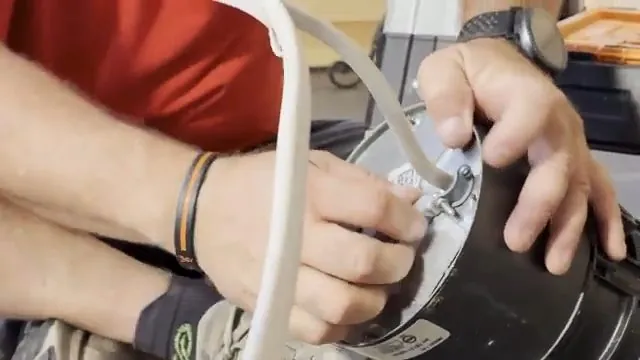
A new disposal means removing the old unit, cleaning the sink opening, mounting the new one, connecting the discharge and the dishwasher hose and wiring or plugging it in. Two details are easy to miss.
- The dishwasher knockout plug: a new disposal has a plug that must be removed if the dishwasher drains through it. Leaving it in blocks the dishwasher.
- Power: a plug-in unit needs an outlet under the sink. A hard-wired unit needs the wiring done safely, which may need an electrician.
Odors
A smell from the sink that comes back after a rinse usually means food residue has built up on the chamber walls and the splash guard. Grinding ice and a handful of citrus peel helps a little. A smell that comes from the drain rather than the disposal is a drain issue, and a sewer smell with gurgling suggests a vent or line problem.
Disposals and dishwashers
On many sinks the dishwasher drains through the disposal. If the dishwasher stops draining, check whether the disposal is clogged or the knockout plug is still in a new unit. Run the disposal with water for a few seconds to clear the connection, then run the dishwasher.
A disposal that keeps tripping the breaker
A unit that trips its breaker or the reset button repeatedly is drawing too much current, usually because the motor is failing or the shredder is binding. Do not hold the reset down or replace the breaker with a larger one. That is the point to stop and call.
What not to put down a disposal
- Grease and oil, which coat the drain line downstream and cause the clogs the disposal then gets blamed for.
- Fibrous or stringy food such as celery, corn husks and artichoke leaves.
- Coffee grounds in quantity, which pack into a paste.
- Pits, bones and any hard item. Run cold water while the unit grinds and for a few seconds after.
Signs a disposal is near the end of its life
A disposal near the end of its life tells you in small ways: it is louder than it used to be, it jams more often, it leaves ground food in the drain and it smells even after cleaning. Any two of those together are a reason to ask about replacement before it fails with a sink full of dishes.
When a disposal problem cannot wait
- Call now: water running from the unit or the cabinet, or a burning smell.
- Call soon: a unit that jams repeatedly or leaks slowly at a connection.
- Can wait: a unit that has simply gone quiet after a reset, if it works again.
For what typically changes the price of a disposal job, see disposal repair and replacement pricing.
Disposal not working?
Call and describe whether it hums, leaks, jams or does nothing at all.