
Home / Services / Water Leak Detection
WATER LEAK DETECTION SERVICES
Water Leak Repair in Sarasota, FL: Finding the Leak Before You Open a Wall
A bill that jumped, a ceiling stain that keeps coming back, or a meter that moves with everything off. Finding the leak is a separate job from fixing it, and it should come first.
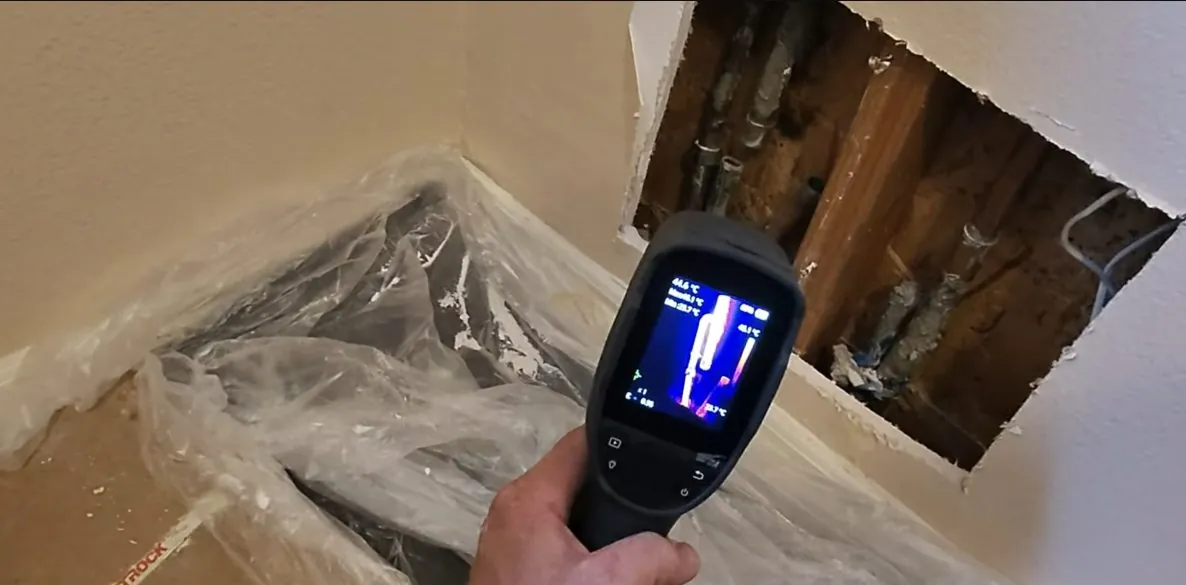
A leak you can see is a repair. A leak you cannot see is a search, and the worst way to run it is to start cutting. The goal of a proper search is to know where the water is before anything is opened, so the opening is small and in the right place.
Where is the water going?
The meter is your best tool. It does not lie, and it takes fifteen minutes.
- Turn off every fixture and appliance that uses water, including the ice maker and any irrigation timer.
- Read the meter and note the numbers. Wait fifteen minutes without using water and read it again.
- Any movement means water is leaving the system. Now shut the main valve at the house and read the meter once more.
- If it still moves with the main shut, the leak is between the meter and the house. If it stops, the leak is inside.
| Meter result | Where to look | Next step |
|---|---|---|
| Moves with the main open, stops with it shut | Inside the house or on a fixture | Check toilets with dye, then call |
| Moves even with the main shut | The line from the meter to the house | Ask your utility where its line ends, then call |
| Does not move, bill still high | Billing, usage or an intermittent leak | Ask the utility for your usage history |
Who owns the line between the meter and the house?
Where the utility's responsibility ends and yours begins depends on the utility and the address, so ask yours directly. Inside the City of Sarasota that is City Utilities. Many addresses outside the city are served by Sarasota County Public Utilities, and Bayshore Gardens and South Bradenton are in Manatee County. Write down the answer before calling a plumber, since it decides who pays for the search.
Meter still moving with the main shut? Call and tell the plumber what you found.
CALL A PLUMBER NOW(727) 766-0323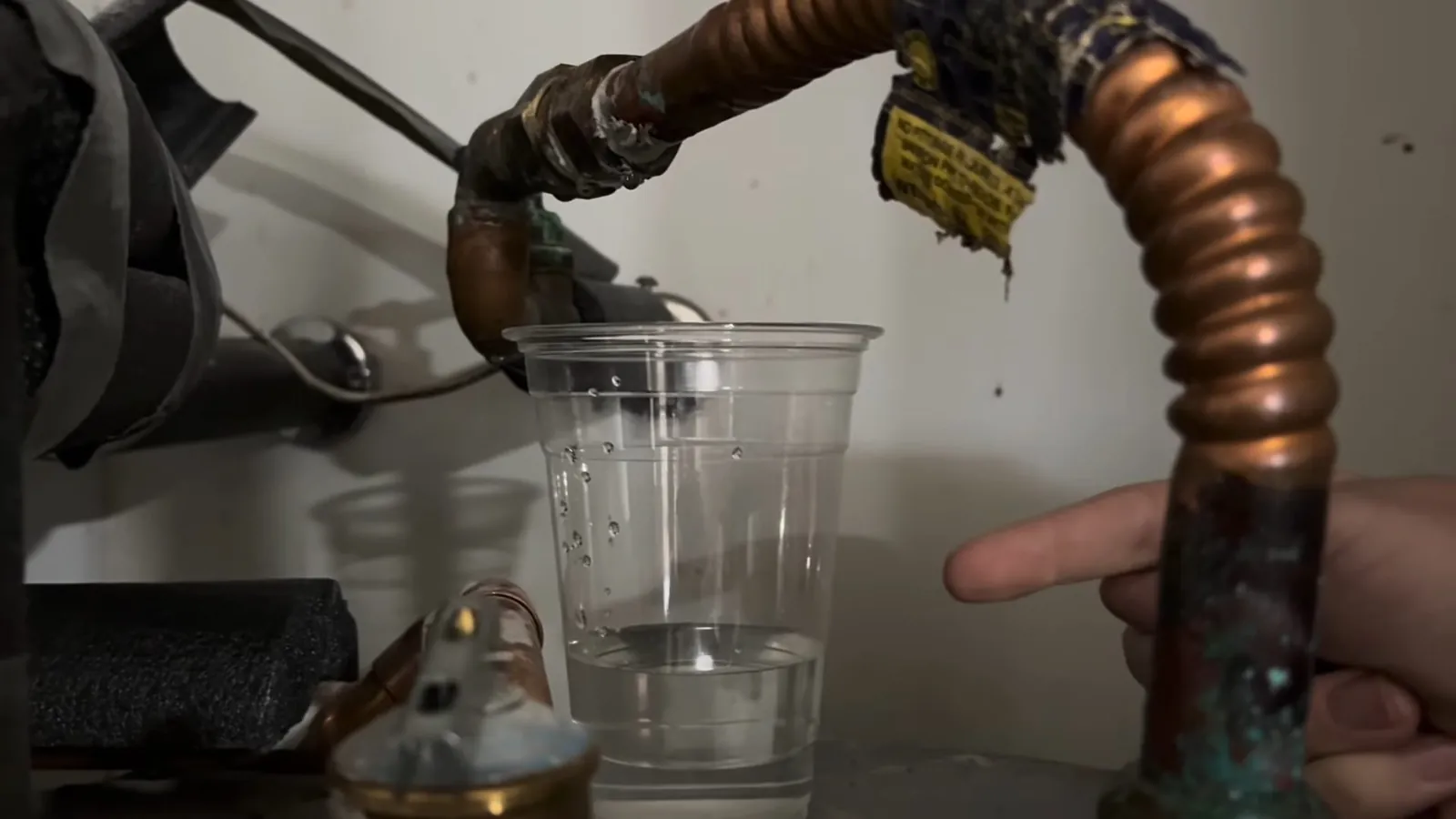
Finding the source of a ceiling or wall stain before opening it
A stain has a source, but it is rarely directly above or behind the stain. Water follows framing and pipe runs before it shows. Before assuming a plumbing leak, rule out the roof, a window and the air conditioner's condensate line, which a plumber cannot fix. If it only stains after a rain, that points up. If it stains when a particular fixture runs, that points to a supply or drain line.
- After rain only: roof, flashing or a window. Call a roofer.
- When the shower runs: the valve, the arm, the pan or the drain above.
- Always damp: a pressurized line, which stays wet when nothing is running.
Acoustic, thermal and pressure testing: what each finds and misses
Plumbers use different tools to find leaks without opening anything. What matters is what you get at the end.
| Tool | What it finds | Limit |
|---|---|---|
| Acoustic listening | Pressurized leaks, by the sound of water escaping | Noise and soil conditions can mask it |
| Thermal imaging | Warm or cool areas where water has soaked | Shows a region, not a point |
| Pressure testing | Whether a specific line holds pressure | Rules lines in or out, does not locate |
| Moisture meter | Wet material inside a wall or floor | Tells you where it is wet, not where it started |
Ask for the findings in writing: which line, roughly where, how it was confirmed and what else was ruled out. If the leak sits under a floor, a leak under a slab has its own set of questions.
Hot line or cold line?
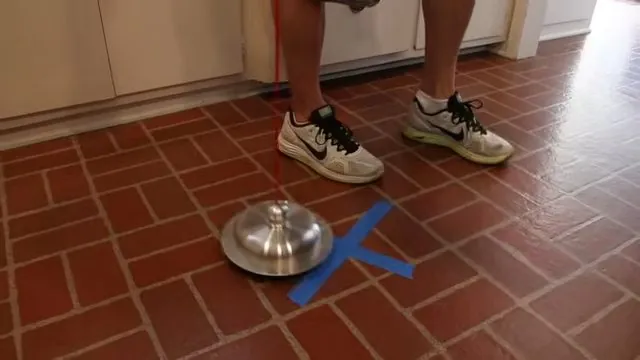
Which line is leaking narrows the search a lot. A water heater that runs more than usual with no change in hot water use, or a floor that feels warm in one spot, points to the hot line. A leak on the cold line often shows up first as a higher bill. If you can shut the water heater's cold supply valve and the meter slows down, the leak is somewhere on the hot side.
Tell the plumber what you noticed. It is one of the quickest ways to shorten the search.
Irrigation and outdoor leaks
A sprinkler zone or drip line can leak underground for weeks. A lawn that stays wet or unusually green over a line, or a bill that rises while the house is unchanged, points to it. Turn the irrigation controller off and repeat the meter test. If the meter stops, the leak is in the irrigation system.
Copper pinhole leaks
Small pinholes in copper tubing can leak for months before a stain appears. If one line has failed, ask whether others of the same age are likely to follow. If leaks keep appearing in the same era of pipe, replacing the piping may be a question worth asking.
A leak that comes back after a repair
If a leak is fixed and the stain or the bill returns, the first repair may have addressed a symptom. Ask the plumber what was confirmed after the repair, such as a pressure test or a dry meter reading. Ask also whether the repaired section sits next to pipe of the same age and condition. A second leak a few feet away is common on tired piping.
Gas smell, roof, pool or HVAC leaks: when it is not a plumber
- A gas smell: leave the house and call the gas utility or 911. Do not try to find it yourself.
- A roof or gutter leak: a roofer or gutter installer, not a plumber.
- A pool or spa leak: a pool specialist. Say so on the call if that is what you suspect.
- Condensation from an air handler: an HVAC technician.
What to do while you wait
Shut the main if water is actively running. Move anything valuable out of the damp area. Take photos of the stain and the meter reading. If water has already reached drywall or flooring, see drying out a wet wall or floor. For what tends to change the price of a leak search, read what a leak search costs.
Bill climbing, nothing visible?
Call and describe the stain, the bill or the sound. The plumber will walk you through the first checks.