
WHOLE-HOUSE REPIPING
Repiping in Sarasota, FL: Patch Another Leak or Replace the Pipes?
The same house, a second and then a third leak. Each repair is small, but together they add up to a pattern. The question is whether to keep patching or to replace the pipes before the next one does damage.
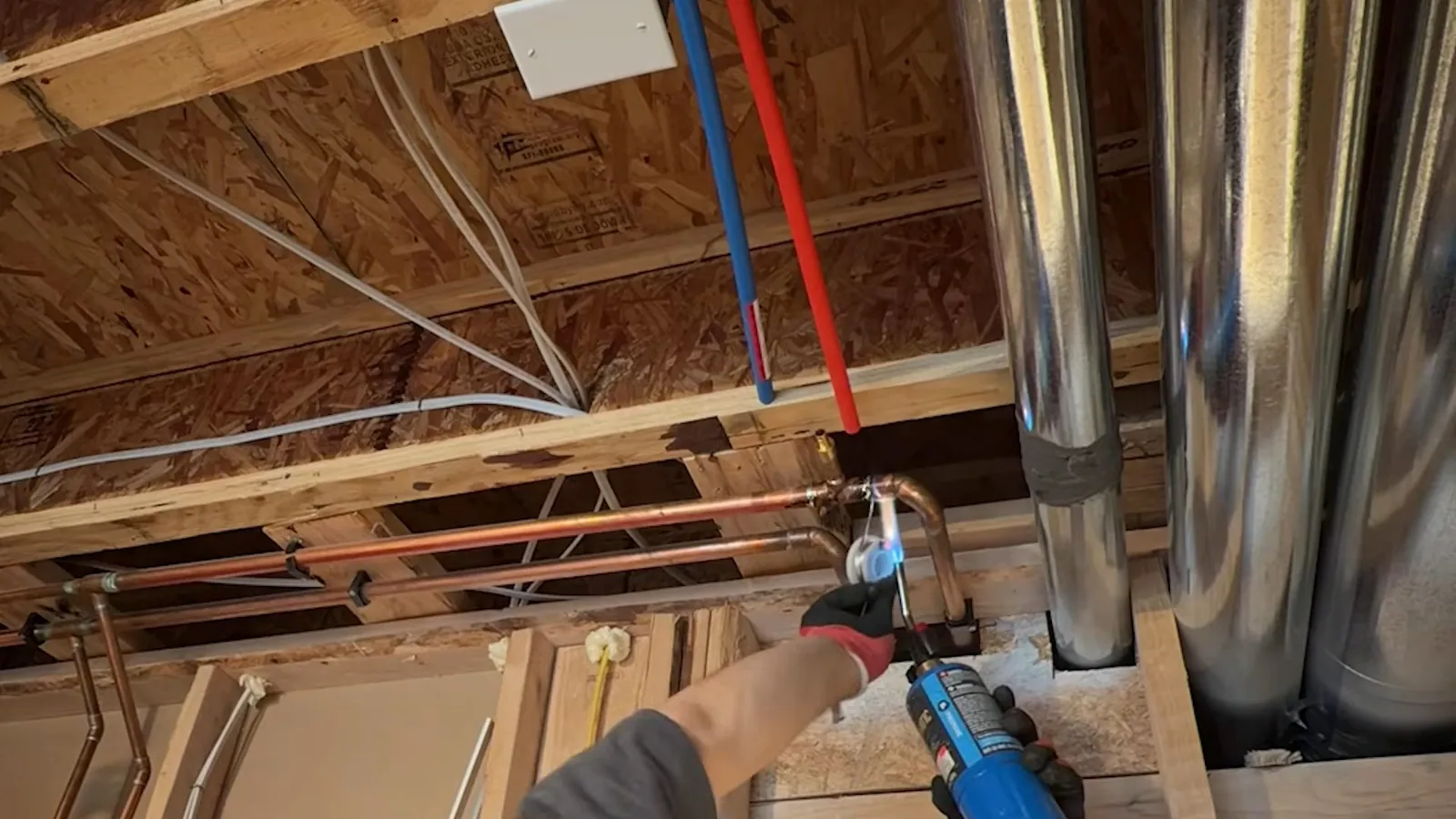
Repiping is the largest plumbing job most houses ever need, and the one most people want to avoid. The honest first answer is often that the house does not need it yet. The second is that if it does, waiting costs more than doing it.
Do I need to repipe, or just repair?
A single failure is a repair. A pattern is something else. What matters is how many leaks, how close together they are and what the plumber finds when the pipe is opened.
| What you have | Usually means | What to ask |
|---|---|---|
| One leak in an otherwise sound system | A single failure | Repair it, and ask the plumber what the rest looks like |
| Two or three leaks in a year on the same line | That line is failing | Ask about replacing that run |
| Pinholes in different places | The pipe is corroding from the inside | Ask about replacing the system |
| Rusty or discolored water at every tap | Pipe corroding, especially in iron | Ask for an inspection |
| Low pressure at several fixtures | Scale or corrosion narrowing the pipe | Ask for a pressure test and an inspection |
Seeing a pattern? Call and describe the leaks and when they happened.
CALL A PLUMBER NOW(727) 766-0323What are the pipes made of?
The material changes the question. Ask the plumber what you have before you ask what to replace it with.
- Copper: common and long-lived, but it can develop pinholes. See tracing a leak in copper for how those are found.
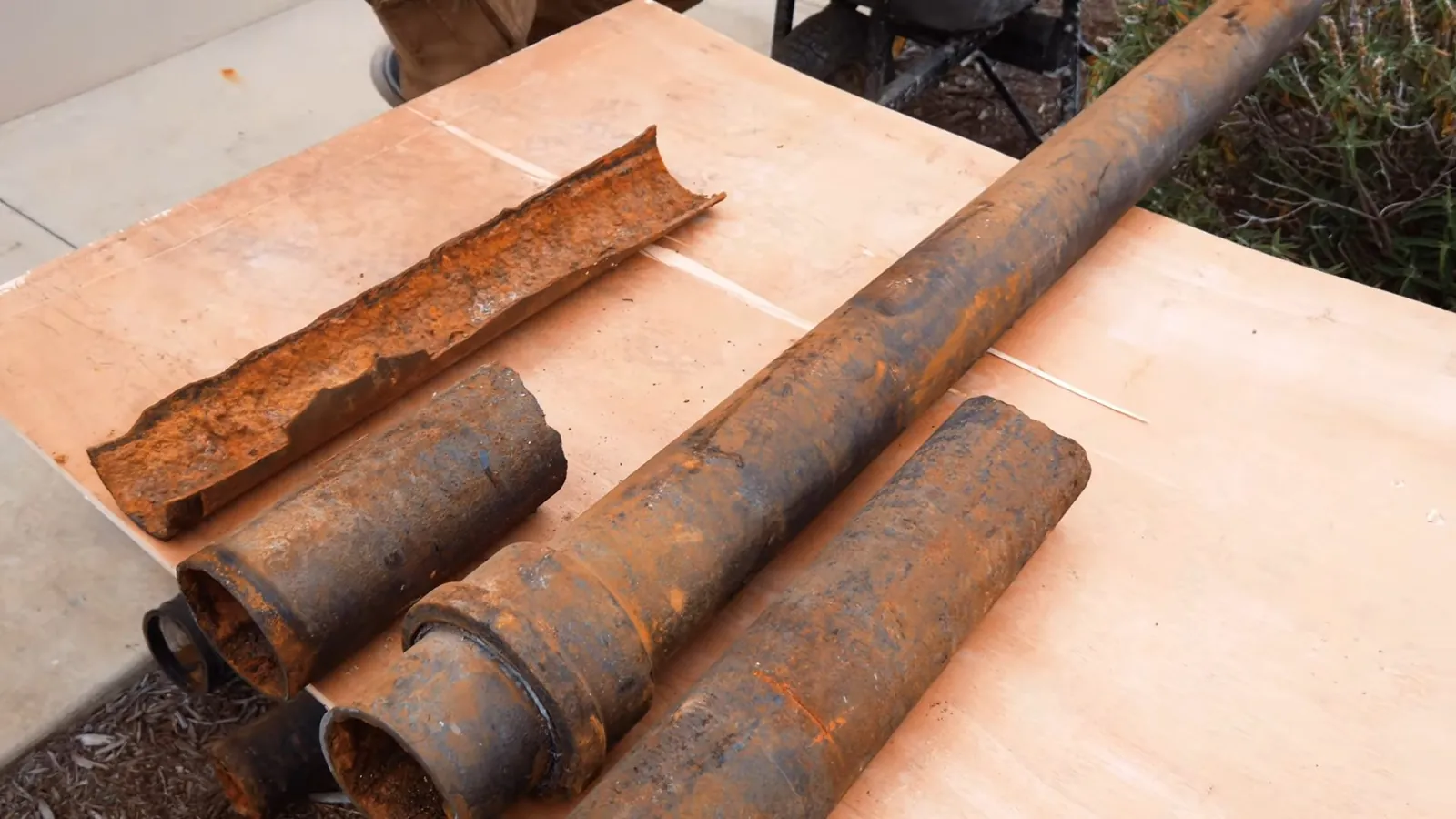
- Galvanized steel: corrodes from the inside and restricts flow. A house with galvanized supply lines is a strong repipe candidate.
- PEX and CPVC: newer plastics. PEX is a common replacement choice. CPVC can become brittle over time, so ask about its condition.
What does a repipe involve?
- The plumber inspects the system and writes a scope: which lines, which fixtures and which walls will be opened.
- The water is shut off, and the old lines are disconnected.
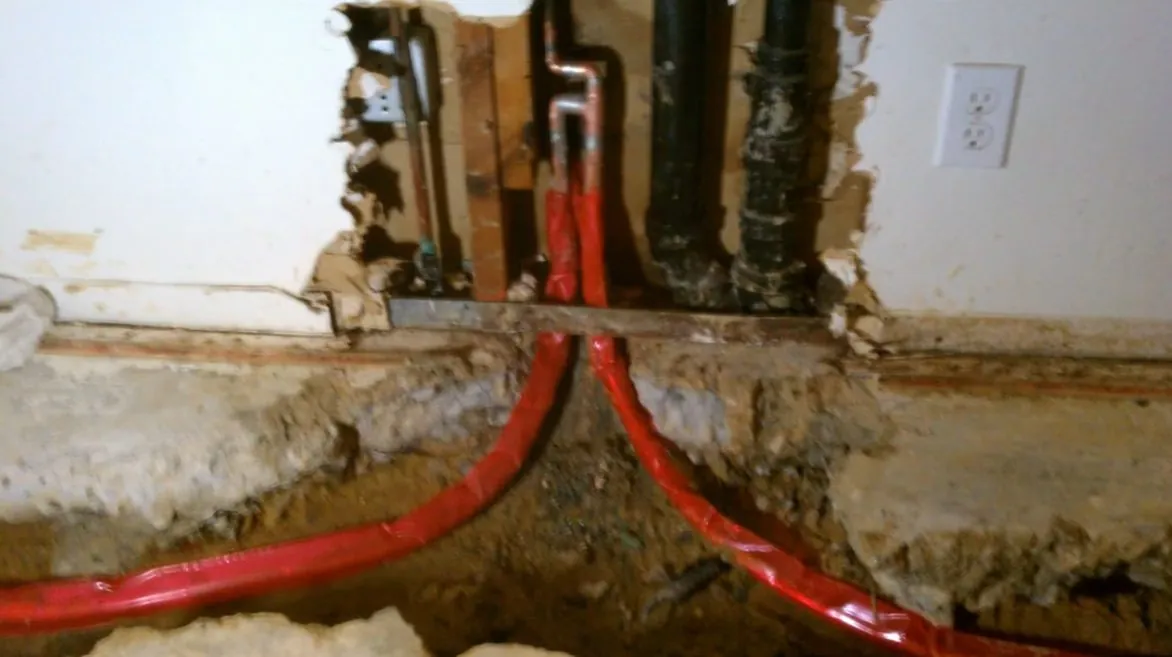
- New lines are run, usually through walls, attic or floor framing, and connected to every fixture and the water heater.
- The system is pressure tested before anything is closed up.
- Walls and ceilings opened for access are patched, if that is in the scope.
- Water is restored and each fixture is checked.
Ask the plumber how many openings there will be, how large and who patches and paints them. Drywall repair is often a separate trade from plumbing, and a quote that leaves it out can leave you with holes in walls.
Whole-house repipe or a partial replacement?
A repipe does not have to cover the whole house. If the failing run is a bathroom group, a single floor or an addition, a partial replacement may be enough. The tradeoff is that the older pipe left behind keeps aging, and each tie-in between old and new is a point to check.
Ask the plumber to recommend a scope for your home repiping and to explain what is left in place and why.
Permit and inspection
The City of Sarasota Building Division treats replacing concealed pipe as new work needing a permit and inspection. A repipe is replacement. Ask who will pull the permit and when the inspection is scheduled, which should be before walls are closed. The City Building Division is at 941-263-6494, and Sarasota County Building is at 941-861-5000 for county addresses.
Does this change my water, or my service line?
The City of Sarasota's 2024 water quality report states that no lead service lines are present within the City. That describes the City's service lines, not the pipes inside your house. If your home is old, ask the plumber to identify the materials inside it.
What to get in the written quote
- The material to be used, and which fixtures and rooms are included.
- How many openings in walls and ceilings, and who patches and paints them.
- Who pulls the permit and when the inspection is scheduled.
- How the water heater, the main valve and any outdoor lines are handled.
- The warranty on materials and on labor.
What drives the price of a repipe
No honest number can be given without seeing the house. The factors that move it are the size of the house, the number of fixtures, how easy the walls and the attic are to reach, the pipe material chosen and how much patching is included. Two quotes can differ a great deal because one includes the drywall repair and the other does not.
What a repipe means for your water, walls and schedule
- Water off: plan for a day or more without running water. Ask when it will be back on for the first time.
- Dust and access: furniture and belongings near opened walls may need to be moved.
- Order of work: ask whether the job is done in stages or all at once.
- Cleanup: ask what the plumber leaves and who handles the finishing.
Should I repipe before a remodel?
If walls are already open for a remodel, the cost of access drops. Ask the plumber to inspect the supply lines in the work area and quote the replacement for what is exposed. See bathroom plumbing for a remodel for related decisions.
Before work starts, find the main shutoff and test it. A valve that will not close should be replaced at the same visit, since it is the one tool that limits damage next time.
When to call now, and when you can plan
- Call now: a failed line with water running. Stop the leak first, then plan the larger fix.
- Plan soon: repeated leaks, discolored water or falling pressure.
- Plan ahead: a house with known old galvanized supply, or a remodel with open walls.
For what typically shapes the price of a repipe, read what moves the cost of a repipe.
Leaks keep coming back?
Call and describe where they have happened and how many. That pattern is what the plumber starts from.