
Home / Services / Slab Leak Repair
SLAB LEAK DETECTION AND REPAIR
Slab Leak Repair in Sarasota, FL: Warm Floors, Damp Edges and a Bill That Climbed
A warm patch on the tile, a damp edge along the baseboard, or the sound of water running with everything off. If your home sits on a concrete slab, any of these deserves a proper look before the damage spreads.
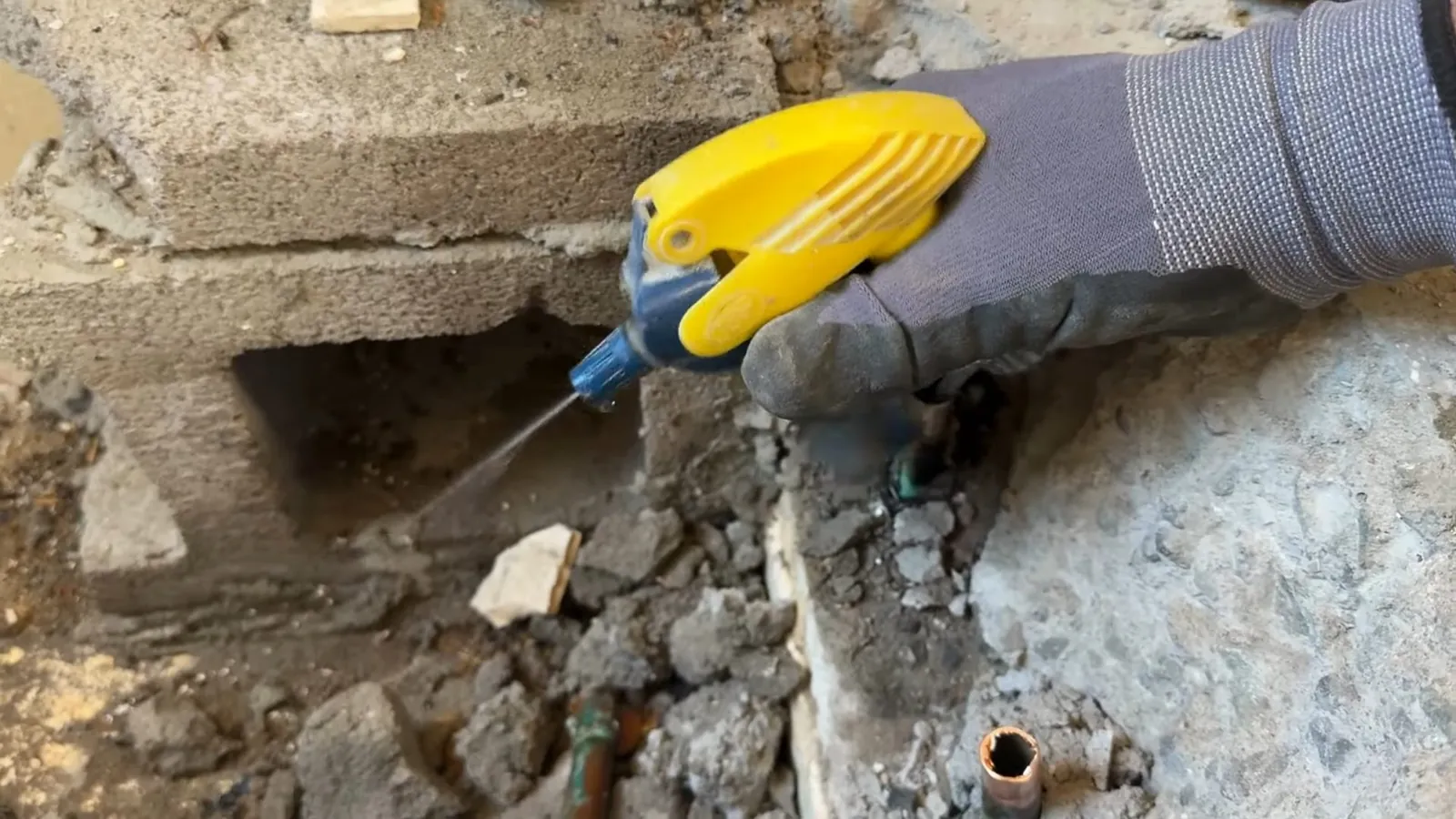
Water under a slab does not announce itself with a puddle. It travels along the concrete and soaks into whatever finish sits on top, so the first sign is often small and in an odd place. By the time flooring lifts, the leak has run for weeks.
Is it really a slab leak? Start with a water meter test
Many leaks that look like slab leaks are not. Start with the checks that cost nothing and tell you the most.
- Turn off every fixture and appliance, then read the water meter. Wait fifteen minutes and read it again. Movement means water is leaving the system somewhere.
- Shut the main valve at the house and check the meter again. If it still moves, the leak is between the meter and the house, not under the floor.
- Walk the floor barefoot. A warm patch points to a hot water line. A cool damp patch may be cold supply or a drain.
- Listen near the bathrooms and the water heater with everything off. A faint hiss or trickle is a clue.
These checks do not locate the leak. They tell you whether to call about a leak under the slab or about the supply line outside, which sits with a different set of questions. If the meter test points outside, see tracing where the water is going.
| What you notice | Most likely means | Call about |
|---|---|---|
| Warm spot on a floor | Hot supply line leak | Slab leak |
| Meter moves with the house shut off at the main | Leak between meter and house | Yard or service line |
| Damp baseboard, no plumbing wall nearby | Leak under the floor or in a wall | Locating the leak first |
| Bill climbed, nothing visible | Leak anywhere, including a running toilet | Meter test, then detection |
Meter still moving and nothing visible? Call and walk the plumber through what you found.
CALL A PLUMBER NOW(727) 766-0323What a slab leak detection report should put in writing
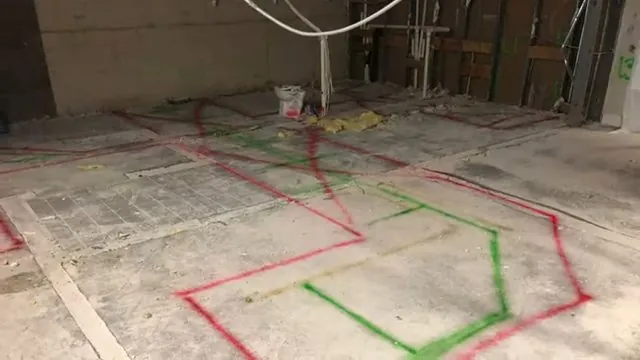
Non-destructive detection uses acoustic and thermal tools to find the leak before anyone breaks concrete. Whatever method is used, ask for a result you can act on.
- The location, marked on the floor and described relative to a wall or fixture.
- Which line it is: hot, cold, or something else, and its approximate depth.
- Photos or a diagram you can give to an insurer or a second plumber.
- What else was ruled out, so you know the plumber looked at fixtures and the water heater too.
Break through, reroute, or repipe?
Once the leak is located, there are three honest routes. The right one depends on the line's condition, where the leak is and how much of the home's piping is the same age.
| Option | Fits when | Trade-off |
|---|---|---|
| Break through the slab and repair the line | One clear leak, accessible, with pipe around it in good shape | Opens a section of floor, then restores it |
| Reroute the line overhead | The leaking run is hard to reach or has failed more than once | New pipe runs through walls or ceiling; patching is needed there |
| Repiping the home | Leaks keep appearing on the same era of pipe | Larger job, but ends the pattern |
Ask what happens to the old line. A rerouted run is capped, not removed, and you should know where.
Why a slab leak does more damage than it seems
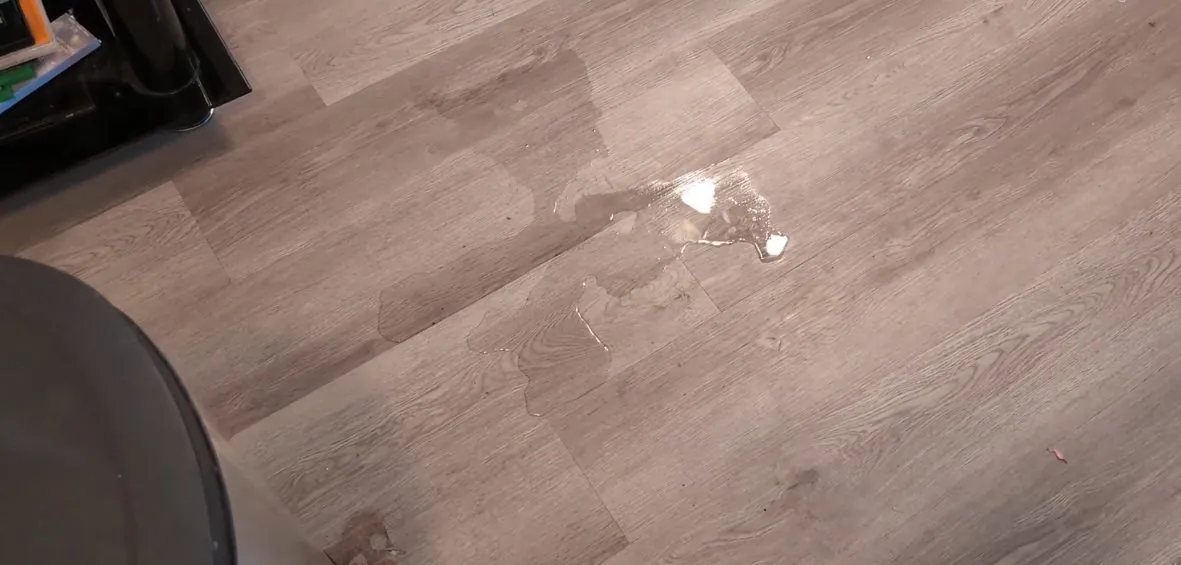
Water under a slab spreads sideways before it rises. It can soften the base of walls, lift laminate and wood flooring at the seams, loosen tile and raise humidity in the room. The hidden part is what makes it expensive: by the time a finish shows damage, the area underneath is already wet.
That is why a small, unexplained bill increase is worth acting on. The meter test above costs nothing and tells you whether to keep looking.
What the repair will disturb
Repair is not invisible. Ask before work starts so nothing surprises you.
- Access: where the floor will be opened, how large the opening will be, and how dust will be contained.
- Restoration: whether the plumber's price includes patching the slab and replacing the floor finish, or only the plumbing. Tile that is no longer made can be hard to match.
- Furniture and water use: what must be moved, and when the water will be off.
- Timing: how long before the line is pressure tested, and when the slab can be patched.
A leak that runs for a long time can also wash soil out from beneath a slab. If you see new cracks in walls or floors near the leak, tell the plumber, and consider asking a structural professional to look. That is not a conclusion this page can draw for your home, only a reason to mention what you see.
Ask too whether a no-dig method suits your line. Trenchless relining is mainly a sewer method, but a plumber can say whether anything similar applies to the leaking line.
Permit and documentation
The City of Sarasota Building Division treats replacing concealed pipe as new work needing a permit and inspection. A reroute or a repipe is replacement. Ask your plumber who pulls the permit and whether an inspection is scheduled before the floor is closed. The City Building Division is at 941-263-6494 and Sarasota County Building is at 941-861-5000 for county addresses.
If you plan to file an insurance claim, call your insurer before work starts and ask what they need. Keep the written detection report, photos and the invoice together. Coverage differs between policies, so ask rather than assume.
Who is responsible for the leak?
A leak inside the house is yours. A leak on the line before the house may sit on either side of an ownership boundary between you and the utility. Ask your utility where its line ends. For Sarasota addresses that is City Utilities, Sarasota County Utilities or a Manatee County utility, depending on the home.
When to call now, and when to schedule
- Call now: a meter that spins with the house off, water pooling in a room, a slab that feels warm over a large area, or the sound of running water you cannot stop at a fixture.
- Schedule soon: a bill that has climbed for two cycles with no clear cause, or a small damp edge that keeps returning.
- Not a slab leak: a toilet that runs after flushing. See a toilet that keeps running.
If water has already reached flooring or drywall, read about water damage restoration for what comes after the leak is fixed.
Hearing water that should not be running?
Call and describe where it is warm, damp or loud. The plumber will start from what you noticed.